

A patient walked into our Toronto medspa last winter convinced she needed a full surgical fix. Forty minutes into the consult, the answer was simpler: our Toronto salmon DNA menu and a four-week home routine. Her question was the same one most people ask about polynucleotides under eye Toronto.
Polynucleotides are short fragments of DNA, usually salmon-derived, injected into thin skin to stimulate fibroblasts. They are skin builders, not volume fillers. The under-eye is the area where the difference matters most. What follows is the version of the conversation we have on a Tuesday afternoon, written down, with the numbers we actually quote.
What is in this guide
Day 1
Treatment, mild swelling 24 to 48 hr
Patients often underestimate the home routine that supports polynucleotides under eye Toronto. A treatment chair gives you the result; a calm, well-built morning and evening routine keeps it. Skip the home work and you pay twice for less than half the effect.
Toronto and Mississauga skin sees more seasonal swing than most cities. Winter dryness, summer humidity, and patio season UV exposure all change what polynucleotides under eye Toronto can deliver in any given month. Good clinics adjust the protocol to the calendar; rigid clinics do not.
What separates an evidence-based clinic from the rest is not the room or the marketing. It is whether the practitioner can explain why polynucleotides under eye Toronto fits this skin, today, in this season. If the recommendation does not change based on your skin tone, your medication list, or what month it is, that is generic advice with a price tag.
Age is the smallest variable that patients overweight. A 28 year old with sun damage may need more than a 48 year old who has stayed out of the sun. Skin biology, not birthday, drives the plan.
Red flag
If anyone offers you a permanent or semi-permanent injectable that is not Health Canada approved, walk out.
Week 1
Tiny bumps soften, skin starts to feel more elastic
By this point, our injectable consult is the natural next step for most patients.
Pricing varies more by injector skill than by city or product. Best on thin, crepe-like under-eye skin; not the right tool for tear trough hollowing, which still needs careful filler or fat transfer.
The way most patients describe a good result, after the fact, is ‘I look like myself, just rested’. That outcome takes a willingness to do less than the maximum the device can deliver.
Energy or product dose is rarely the differentiator. The differentiator is technique – how the practitioner reads your skin, where they place the energy or product, and when they stop.
Recovery is where the work either pays off or quietly unravels. The first 72 hours set the tone; the first two weeks lock in the result. Skip the rules and the visible change is smaller, even if the chair time was identical.
Save your money
Skip the upgrade-pack discount on the consult; the right plan is built around your skin, not their margin.
Week 4
Second session if doing the standard protocol
Lifestyle is a real constraint. If your job has you on camera Monday morning and the treatment has 5 days of mild redness, schedule it on a Wednesday and you saved yourself a difficult Monday.
Skin tone is the other major axis. Fitzpatrick I to III tolerates aggressive light-based work; IV to VI rewards radiofrequency and conservative settings. Mismatch the device and the skin tone and you can buy yourself months of pigment to undo.
Age is the smallest variable that patients overweight. A 28 year old with sun damage may need more than a 48 year old who has stayed out of the sun. Skin biology, not birthday, drives the plan.
Marketing usually compresses the timeline. A treatment that takes 12 weeks to peak gets sold as a single afternoon transformation. Set expectations from week 12, not week 1.
Month 2
Visible texture and elasticity improvement
Hydration, sleep, and a calm cleanser are doing more for your recovery than most patients credit. The active ingredient is collagen and elastin remodelling, and your body cannot do that work on 4 hours of sleep.
A small follow-up visit at 2 weeks is the cheapest way to catch problems early. Most clinics include it in the package; if yours does not, ask. Catching a small issue at week 2 is a 10 minute fix; catching it at week 8 is a longer conversation.
Patients who skip sun protection in the recovery window lose 30 to 50 percent of the visible result, regardless of the treatment. A daily mineral SPF, applied properly, is not a marketing add-on; it is the cheapest way to keep the result you paid for.
Always ask which option the practitioner would skip. The negative recommendation is more honest than the positive one. A clinic willing to tell you ‘do not do this here’ is a clinic worth your trust on what they recommend instead.
Month 3
Third session, peak result building
Marketing usually compresses the timeline. A treatment that takes 12 weeks to peak gets sold as a single afternoon transformation. Set expectations from week 12, not week 1.
Three claims travel together with this category: ‘instant’, ‘permanent’, ‘risk-free’. None are true. The honest version is ‘gradual, durable with maintenance, low risk in trained hands’.
The ‘natural look’ is a real thing, not a slogan. It comes from doing less, sequencing more, and resisting the urge to fix everything in one visit. The most overdone faces in Toronto did not start out wanting that result.
The most common mistake with polynucleotides under eye Toronto is sequencing. Done at the wrong moment in your routine, the same treatment gives you redness and rebound. Done correctly, the same treatment gives you visible change in 6 to 12 weeks. The chemistry is the same; the timing is not.
What done looks like
Best on thin, crepe-like under-eye skin; not the right tool for tear trough hollowing, which still needs careful filler or fat transfer. Toronto pricing sits in the $400 to $700 per session range; package pricing is typical.
Hydration, sleep, and a calm cleanser are doing more for your recovery than most patients credit. The active ingredient is collagen and elastin remodelling, and your body cannot do that work on 4 hours of sleep.
A small follow-up visit at 2 weeks is the cheapest way to catch problems early. Most clinics include it in the package; if yours does not, ask. Catching a small issue at week 2 is a 10 minute fix; catching it at week 8 is a longer conversation.
Recovery is where the work either pays off or quietly unravels. The first 72 hours set the tone; the first two weeks lock in the result. Skip the rules and the visible change is smaller, even if the chair time was identical.
Before-and-after photos are a useful tool and an easy place to be misled. Look for consistent lighting, the same angle, and the same expression in both photos. Anything else is a styling exercise, not evidence.
Marketing usually compresses the timeline. A treatment that takes 12 weeks to peak gets sold as a single afternoon transformation. Set expectations from week 12, not week 1.
How patients in Toronto and Mississauga decide
Best on thin, crepe-like under-eye skin; not the right tool for tear trough hollowing, which still needs careful filler or fat transfer.
The decision tree is shorter than it looks. Goal first, then skin tone, then budget, then downtime tolerance. The treatment falls out of those four. Anyone who reverses the order – device first, goal later – is selling a hammer.
Money is the last filter, not the first. A treatment that fits your skin and your goal but is over budget is a different conversation than a cheaper treatment that does not fit. Sort the medicine first, then the math.
Always ask which option the practitioner would skip. The negative recommendation is more honest than the positive one. A clinic willing to tell you ‘do not do this here’ is a clinic worth your trust on what they recommend instead.
Before-and-after photos are a useful tool and an easy place to be misled. Look for consistent lighting, the same angle, and the same expression in both photos. Anything else is a styling exercise, not evidence.
Three claims travel together with this category: ‘instant’, ‘permanent’, ‘risk-free’. None are true. The honest version is ‘gradual, durable with maintenance, low risk in trained hands’.
Hydration, sleep, and a calm cleanser are doing more for your recovery than most patients credit. The active ingredient is collagen and elastin remodelling, and your body cannot do that work on 4 hours of sleep.
Patients who skip sun protection in the recovery window lose 30 to 50 percent of the visible result, regardless of the treatment. A daily mineral SPF, applied properly, is not a marketing add-on; it is the cheapest way to keep the result you paid for.

Polynucleotides Treatment Timeline
- Day 1: Treatment, mild swelling 24 to 48 hr
- Week 1: Tiny bumps soften, skin starts to feel more elastic
- Week 4: Second session if doing the standard protocol
- Month 2: Visible texture and elasticity improvement
- Month 3: Third session, peak result building
- Month 6: Maintenance dose; effect lasts 6 to 9 months
Common questions
How are polynucleotides different from filler under the eye?
Filler adds volume; polynucleotides do not. Polynucleotides are short DNA fragments, usually salmon-derived, that work as a regenerative bio-stimulator. They prompt fibroblasts in the dermis to produce more of their own collagen and improve local tissue quality over a series of sessions. Under the eye, that translates to thicker, less translucent skin and a softer hollow rather than a pillowed correction. Filler is the right choice when there is a real volume deficit; polynucleotides are the right choice when the skin itself is the problem and adding volume would only make the area look puffy or shadowed. Many patients eventually need both.
Is the procedure painful?
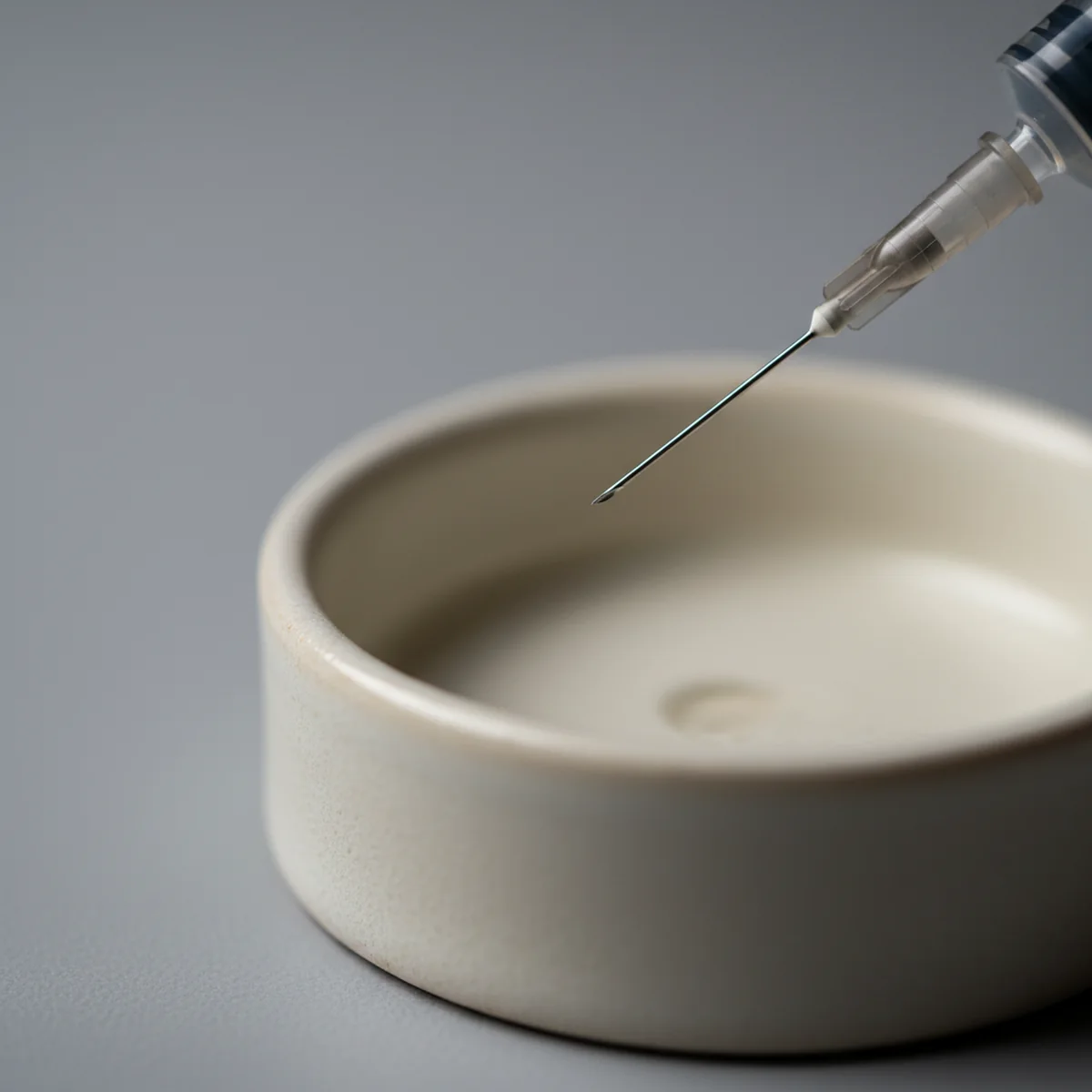
Most patients describe it as five out of ten on the discomfort scale during the injections, with two or three small pinches per side under the eye. A topical anesthetic cream applied 30 minutes before the visit reduces it further. The needle used for under-eye polynucleotides is very fine, finer than a typical filler cannula, and the depth is shallow because the product is placed in the superficial dermis rather than below the orbicularis muscle. Mild swelling and a few small bumps at the injection points are expected for two to three days; both resolve fully. Cold compresses for the first hour reduce swelling.
How many sessions do I need before seeing change?
The standard protocol is three sessions, spaced three to four weeks apart. The change is gradual rather than immediate; most patients notice softer skin texture and reduced shadow at day 21 to 28, with continued improvement through month three. The full result of the series is judged at month four. Maintenance is typically one session every nine to twelve months once the initial series is complete. If you are looking for a one-and-done treatment with a visible change at the end of the appointment, polynucleotides are the wrong tool; consider a small amount of filler or a brief boost from radiofrequency instead.
Is it safe alongside Botox or filler?
Generally yes, with sequencing. The current consensus is to space polynucleotides at least two weeks from any neuromodulator and at least four weeks from filler in the same area, in either direction. This protects the existing product and gives the polynucleotides clean tissue to remodel. If you have an upcoming filler appointment, do polynucleotides first, then add filler later if still needed; doing it the other way risks the bio-stimulator working against fresh filler. Always disclose all recent injectable treatments at the consult so the provider can sequence the plan correctly. Combination protocols across multiple visits are now standard practice.
Who is not a good candidate?
People with a history of severe salmon or fish allergy should not have polynucleotides, since most current formulations are derived from salmon DNA. Active local infection, including a current cold sore, postpones the visit. Pregnancy and breastfeeding are caution categories: the safety data is limited and most providers will defer until you are no longer breastfeeding. Patients on isotretinoin should wait until six months after their last dose. A history of keloid scarring deserves an in-person assessment. If your under-eye concern is mostly fat-pad bulging rather than skin quality, the right tool is a referral for surgical evaluation rather than polynucleotides.
Continue exploring
Common tear-trough filler mythsHow long dermal fillers actually lastHow collagen really worksSculptra vs Radiesse for rejuvenation
Under-eye work is about tissue quality, not just volume.
Schedule your visit ›Reforme Lab is a medspa serving Toronto and Mississauga. The information here is educational and not medical advice. Talk to a licensed professional before starting any aesthetic treatment.