
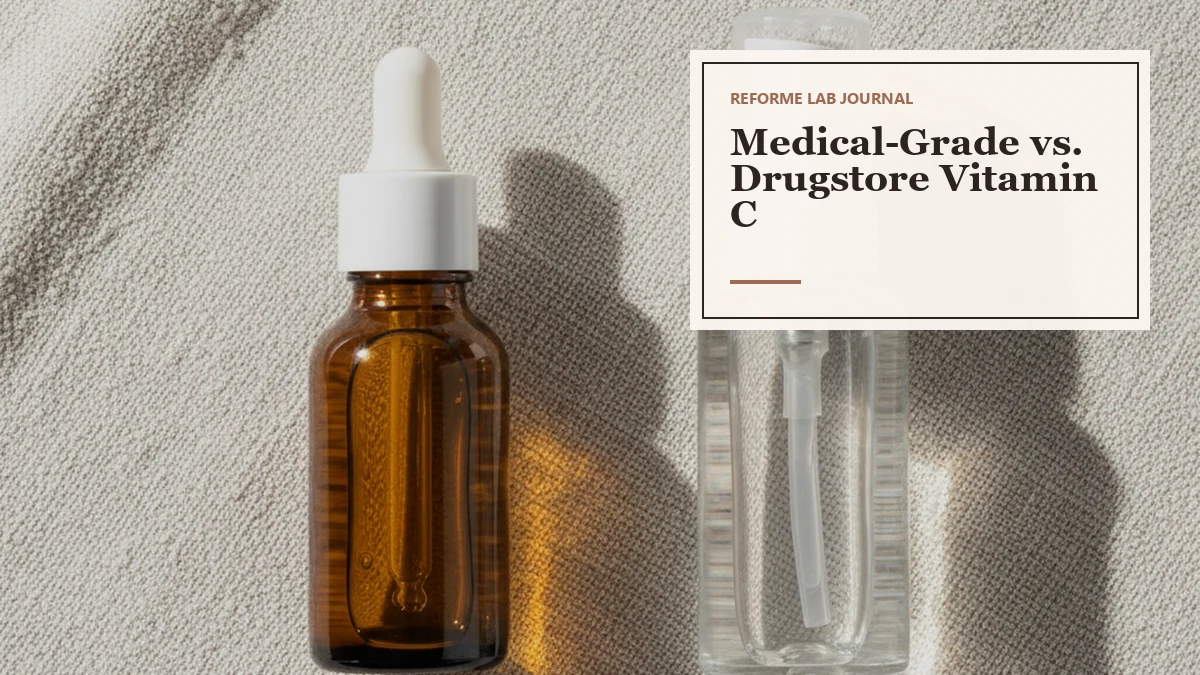
If brightness and anti-aging are your goals, the bottle on your shelf matters. However, in the world of skincare, “Vitamin C” isn’t just one single molecule. The label might say Vitamin C, but what’s inside can range from a potent, pure acid to a diluted, buffered ester that barely penetrates the skin. At Reforme Lab, we believe the difference between a drugstore find and a medical-grade serum comes down to three things: stability, concentration, and delivery.
The Science of the “Sting”
For Vitamin C (specifically L-ascorbic acid) to actually work, it has to be formulated at a pH below 3.5. If the pH is too high, the molecule can’t get past your skin barrier; if the packaging allows light or air in, the serum oxidizes and loses its power before it even touches your face. This is the biggest hurdle for drugstore brands – mass-market products are often designed for shelf-life over potency, resulting in “stable” derivatives that simply don’t deliver the same clinical results as medical-grade formulas.
Decoding the Ingredients
Not all Vitamin C is created equal. Here is what you’ll typically see on a label:
- L-Ascorbic Acid (L-AA): The most studied and powerful form. It provides real penetration but is highly unstable and oxidizes fast if not formulated perfectly.
- Tetrahexyldecyl Ascorbate (THD): A gold-standard, oil-soluble version that is stable and penetrates deep into the lipid layer—ideal for sensitive skin.
- Ascorbyl Glucoside: A gentler derivative often found in drugstore brands. It’s stable but requires a slow conversion process on the skin to become active.
The Toronto Factor: Seasonal Skin Shifts
In Toronto and Mississauga, our skin deals with intense seasonal swings. From the bone-dry winters that compromise your skin barrier to the high UV exposure of “patio season,” your Vitamin C needs to do more than just brighten—it needs to protect.
Medical-grade serums, such as those from ZO Skin Health, are often bolstered with Vitamin E and Ferulic Acid. Studies show this “power trio” triples the antioxidant protection and extends the stability of the formula, making it a year-round essential for the GTA climate. (Check out our ZO chemical peel for more info on the brand.)
Is Medical-Grade Vitamin C Worth the Investment?
The term “medical-grade” in Canada is industry shorthand for higher concentrations and tighter quality control. While a drugstore serum might cost less upfront, a 15% L-AA serum that has turned orange or yellow in the bottle is no longer active, meaning you’re paying for a product that isn’t working.
Investing in a medical-grade serum ensures that the “medicine” is sorted before the “math.” By the time you see us at Reforme Lab for a consultation, we focus on sequencing your routine so your home care supports your in-clinic results. After all, a daily mineral SPF and a potent Vitamin C are the cheapest ways to protect the investment you’ve made in your skin.
Reader questions
Is medical-grade vitamin C really worth the price?
It depends on what you are buying. The two things that justify the higher price tag are concentration and formulation stability. Medical-grade L-ascorbic acid serums are usually 15 to 20 percent strength in low-pH bases, packaged in opaque dropper bottles, and delivered to clinics with a documented expiry. Most drugstore products are 5 to 10 percent ascorbic acid derivatives in clear containers exposed to fluorescent light. Clinical studies on visible improvement to dark spots and dullness used the medical-grade formulations, not derivatives. If you have specific pigmentation concerns, the upgrade pays back; for general antioxidant maintenance, a quality drugstore option works.
How can I tell if my serum has gone bad?
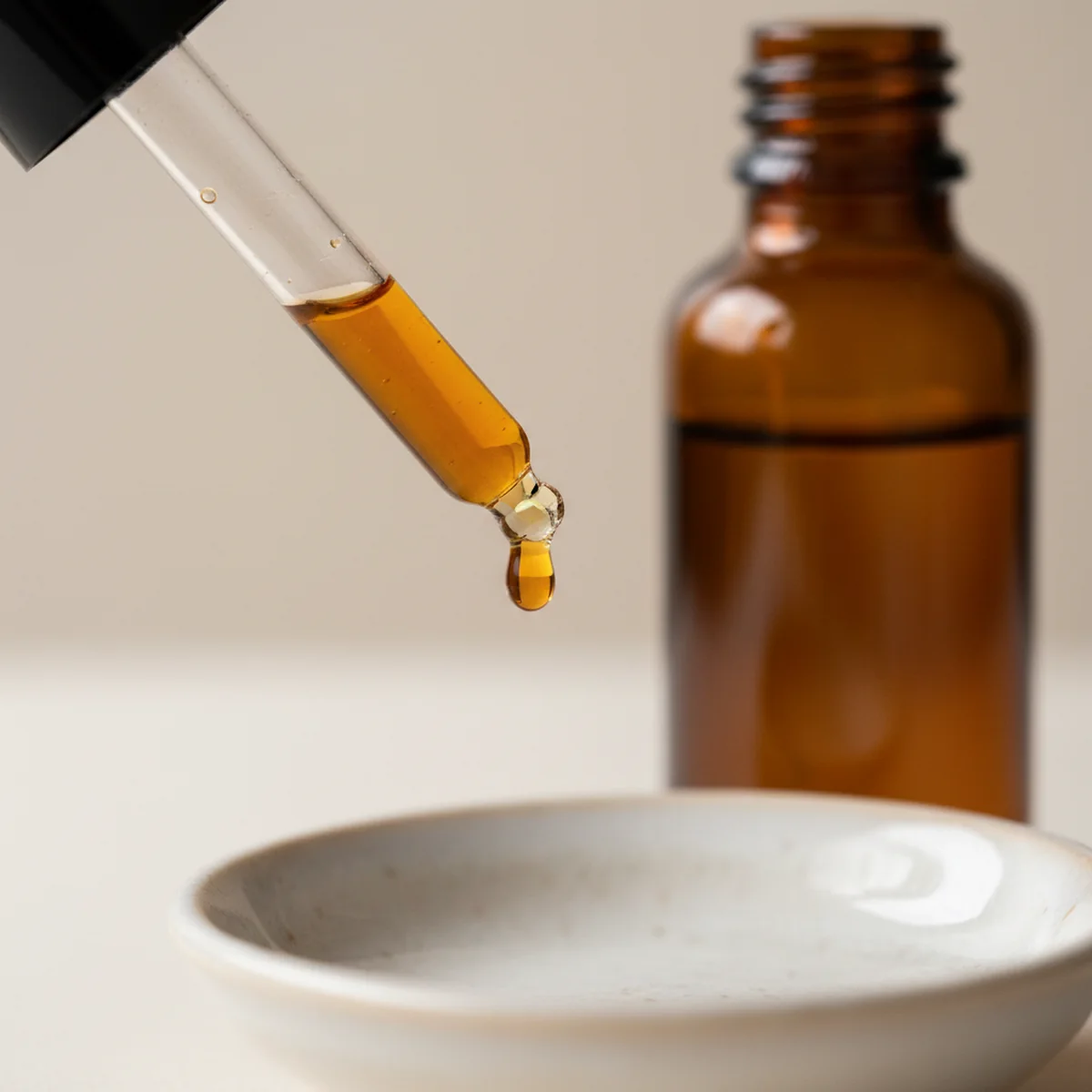
L-ascorbic acid oxidizes from clear to pale yellow, then to amber, then to dark brown. Pale yellow is still effective. Amber is past peak. Dark brown means it is breaking down faster than it is helping and may aggravate sensitive skin. Smell is the second clue: a fresh serum smells faintly metallic or has no scent; an oxidized serum smells faintly sour. Most opened serums last six to eight weeks at peak potency, three months at acceptable potency. Storing in the fridge slows oxidation. Buying smaller bottles you finish in a month is a more reliable strategy than buying the family-size value pack.
Will any vitamin C work for melasma?
Vitamin C alone, even medical-grade, will only soften melasma at the edges. It is a useful supporting actor in a melasma protocol but never the lead. The lead is strict daily mineral sunscreen, ideally tinted to block visible light. The supporting cast includes prescription tranexamic acid topically or orally, a tyrosinase inhibitor like cysteamine or alpha-arbutin, gentle resurfacing, and a controlled retinoid. Medical-grade vitamin C in this protocol works because the L-ascorbic acid penetrates deeply enough to interrupt the pigment-formation pathway. A drugstore derivative does not reach the same depth and produces faint, slow improvement.
Should I layer it with other actives?
Vitamin C goes on first thing in the morning over clean dry skin, before sunscreen. It pairs well with ferulic acid and vitamin E in the same formulation; this trio is what the original Duke study tested. It does not pair with niacinamide in the same step at high concentrations because the ascorbic acid will lower the pH and irritate. Wait 10 to 15 minutes between the two if both are in your routine, or use them in different steps morning and night. It does not pair with benzoyl peroxide; the peroxide oxidizes the ascorbic acid on contact and renders it useless.
Is it safe in pregnancy?
Topical vitamin C is broadly considered safe in pregnancy and breastfeeding because absorption into the bloodstream is minimal. It is one of the few useful actives that stays on the okay list when retinoids and most acids come off. If you are pregnant and looking for brightening or antioxidant support without irritation, this is a reasonable upgrade. Keep the rest of the routine bland: a gentle cleanser, a ceramide moisturizer, and a mineral sunscreen. Skip any vitamin C product that is also marketed as a peel or contains glycolic or salicylic acid above 2 percent. Always confirm with your physician if there is doubt. In the GTA, where seasonal UV shifts can worsen pregnancy-induced melasma, starting a stable Vitamin C early can help prevent pigment from deepening before ‘patio season’ hits.
Keep reading on this topic
Why your skin barrier mattersSix red-flag ingredients to avoidBuilding a routine with ZO Skin HealthCan you layer chemical exfoliants?
If brightness is your goal, the bottle on your shelf matters.
Book your visit ›Reforme Lab is a medspa serving Toronto and Mississauga. The information here is educational and not medical advice. Talk to a licensed professional before starting any aesthetic treatment.